Intervention Plan ↝ Jumpstart Feedback

Last year, I led the development and delivery of a series of pre-term workshops for incoming students, aimed at developing core technical skills often treated as prerequisites for many CCI courses. A core aim of the workshops is to create a welcoming learning environment for diverse cohorts, supporting them in connecting existing knowledge and practices to unfamiliar technical contexts. The workshops emphasise meta-skills for digital learning, open source software, and diverse political, cultural and artistic engagements with technology.

protests against the .docx document format standardisation in Bangalore, 2008, used to illustrate the political dimension of file formats in a workshop oriented around improving students’ skills with media types, via Wikipedia, CC BY-SA 3.0

I proposed these workshops last year as I share the concern of many academic staff that students seem increasingly overwhelmed by the introductory stages of their courses. This is a particularly acute issue for students on year-long programs, who are expected to master complex material in a compressed time period.

Although UAL does not collect this specific data, in my experience, students on year-long postgraduate courses are significantly more likely to speak English as a second language (ESL). As LaCosse et al. reflect, “the amount of motivation and effort ESL students must expend to master difficult STEM material may frequently be greater than that required of non-ESL students” (LaCosse et al., 2020). The same may also be said for those with caring responsibilities, disabilities, and financial stressors, and this can be compounded when these barriers intersect. Stress, poor mental health, and alienation are core issues that affect the retention of these students (UAL, 2026).

mascot stickers for the workshops, designed
by ex-CCI student and graphic designer Kesiah Ide

While I received positive feedback from some students during last year’s workshops, the majority of attendees did not report completing the tasks, and the student facilitators hired to create a less intimidating environment were not engaged by most attendees. As such, there is a danger that the workshops could potentially exacerbate, rather than mitigate the stress experienced by some incoming students.

My planned intervention is to run interactive feedback sessions with current students, and to use these to inform the course’s redevelopment for next year. In particular, I want to understand and improve the learning outcomes of students with intersecting barriers to access, and develop a framework for evaluating the effectiveness of these interventions. Existing accommodations include running multiple sessions at different times (so that students with work or caring responsibilities can attend), making material available in diverse formats, and hiring current students as facilitators to ensure adequate support is available.

teaching command line skills through interactive fiction, an approach inspired by
Melanie Hoff’s Folder Poetry workshops (Hoff, 2018)

Reflecting on bell hooks’ argument that excitement in learning stems from communal work (hooks, 1994), I want to take a dialogical approach to the design of the feedback sessions. The sessions will be structured as short roundtable discussions, combining structured questions with open-ended conversation. I am particularly interested to learn which learning outcomes students found most useful, emphasising relevant and practical aspects, and reasons for non-participation where relevant.

A concern with this intervention is how to avoid self-selection bias, as the voluntary nature of the feedback sessions means that students in attendance will be more likely to be engaged (Caballero Díaz et. al, 2026). While this may not be entirely mitigated, I hope to address this by including students who did not attend the original course in the feedback session, and prioritising feedback from students who reported more difficulty with the material.

To respect students’ time and contribution, I will apply for funding to provide food at these sessions. To broaden opportunities for feedback, I will also give students the option to respond asynchronously, anonymously and online, or informally in person.

References

Caballero Díaz, D., Amin, A., Musa, P., & Leung, V. (2026). Methodological Choices When Assessing Summer Bridge Programs in STEM Majors: A Scoping Review. Education Sciences, 16(2), 220. https://doi.org/10.3390/educsci16020220

Hoff, M. (2018) Peer-to-Peer-Folder-Poetry. (online) GitHub. Available at: https://github.com/melaniehoff/Peer-to-Peer-Folder-Poetry/blob/master/two-day-workshop.md (Accessed 11 Feb. 2026)

hooks, b., (1994), Teaching to Transgress: Education as the Practice of Freedom, Routledge, ISBN 0-415-90807-8

LaCosse, J., Canning, E.A., Bowman, N.A., Murphy, M.C. and Logel, C. (2020) A social-belonging intervention improves STEM outcomes for students who speak English as a second language. Science advances, 6(40), p.eabb6543.

UAL (2026) Access and Participation Plan 2025-26 to 2028-29, Available at: https://www.arts.ac.uk/about-ual/public-information/office-for-students-info

Posted in Inclusive-Practices | Leave a comment

Belief ↝ Software Licensing

Within the CCI, we encourage students to contribute to and participate in Open-Source Software (OSS) development. An important ethical concern within OSS is the use of licensing (conditions that determine how software may be used), and its intersection with personal belief.

Licensing choices can have many consequences for the way that software is used in the world. A famous example is the shift in the early 2000s from copyleft licensing (which requires people re-using the software to fully open-source their software) to permissive licensing (which allows people re-using software to do whatever they like with it) leading to pervasive adoption of open-source tools by corporations who wanted to keep their own code closed-source (Asparouhova, 2020).

The changing ratio between copyleft licenses (which dominated pre-2010) and permissive licenses, used by developers in different programming languages. Source: redmonk.com, CC BY 3.0

Another consequence of permissive licensing is that software developed for one purpose can be used for a totally different one, potentially morally at odds with the ideals of the original developers. For example, border cameras developed by American defense company Anduril make use of computer vision datasets originally created for civilian use (Levy, 2018), and open-source drone software developed by racing enthusiasts has been used extensively by both sides in Russia’s war on Ukraine (Kühn, 2022).

An Anduril Sentry tower on the US-Mexico border. The software in these towers was trained using open-source machine learning datasets. Source: Wikimedia Commons, user: EFF, CC BY 3.0

I am personally a committed pacifist, and a quaker. A core tenet of quakerism is to live “in the virtue of that life and power that takes away the occasion of all wars” (Fox, 1651). As a technologist, this means that I decline to work on any projects in receipt of military funding, or that may be used in a military context. In recent years, I have found this belief more challenging to accommodate, as the line between military and civilian technologies has become substantially blurred through the use of machine learning systems.

While I do not express my personal beliefs directly in my teaching practice, these experiences mean I am committed to helping students of diverse beliefs and faiths to uphold their values in relation to their work. I am often engaged in conversations with students about the politics of ‘dual use’ technology such as LLMs, and tensions within OSS around military and corporate usage (Kühn, 2022).

Intersecting identities can raise the stakes of such discussions — for example, muslim students objecting to the use of a surveillant technology on the basis of their faith might both be disproportionately targeted by that same technology, and be more likely than myself to experience epistemic injustice in response to their objection (Rekis, 2023). I also find it important not to be didactic: people enact their beliefs in different ways, and financial concerns, family commitments and visa restrictions can create additional challenges for students attempting to reconcile a career in tech with their values.

When discussing OSS specifically, ethical software licensing projects offer an opportunity to consider the enactment of belief within a technical context. Two significant examples are the Hippocratic License, which prohibits use in contexts that infringe on human rights (OECA, n.d.), and the Anticapitalist Software License, which prohibits use under conditions where labour is exploited for profit (Nasser and Pipkin, n.d.).

While the enforcement of software licenses in the current legal climate may be difficult, it is not impossible, as two recent cases upholding copyleft licenses have demonstrated (Aldama, 2025). I believe that sincere engagement with these ethical questions in technology — even when no easy solutions are apparent — is an essential part of students’ development of their own attitudes and values within their work. Moreover, an assurance to students that there is a means to uphold their beliefs may be essential for inclusion in courses (such as BSc Creative Computing) where contribution to OSS is a required learning outcome.

References

Aldama, J. (2025), Open Source License Compliance Lessons from Two Landmark Court Cases, FossID Blog, available at: https://fossid.com/articles/open-source-license-compliance-lessons-from-two-landmark-court-cases/, accessed 09/05/2026

Asparouhova, N. (2020), Working in public: the making and maintenance of open source software, Stripe Press

Fox, G. (1651), Quaker Peace Testimony, via Quaker faith & practice: The book of Christian discipline of the Yearly Meeting of the Religious Society of Friends (Quakers) in Britain (2013), 5th edn. London: Quakers in Britain, 24.08.

Kühn, B.M, (2022), Copyleft Won’t Solve All Problems, Just Some of Them, Software Freedom Conservacy Blog, available at: https://sfconservancy.org/blog/2022/mar/17/copyleft-ethical-source-putin-ukraine/, accessed 09/05/2026

Levy, S. (2018), Inside Palmer Luckey’s Bid to Build a Border Wall, Wired Magazine, available at: https://web.archive.org/web/20210414015255/https://www.wired.com/story/palmer-luckey-anduril-border-wall/, accessed 09/05/2026

Nasser, R. and Pipkin, E. (no date) The Anti-Capitalist Software License (v 1.4). Available at: https://anticapitalist.software/ (Accessed: 9 May 2026).

Organization for Ethical Source and Corporate Accountability Lab (no date), The Hippocratic License 3.0: An ethical license for open source communities. available at: https://firstdonoharm.dev/, accessed 09/05/2026

Rekis, J., (2023), Religious identity and epistemic injustice: An intersectional account, Hypatia, 38(4), pp.779-800

Posted in Inclusive-Practices | 4 Comments

Disability ↝ Malleability

“Design can include making something new, but it can also include unmaking the world as it is, or perhaps remaking it, with parts and systems alike.” (Hendren, 2020)

Two ideas really stood out to me in the videos. The first was that holistic support benefits everyone. The second was that having many paths to ‘success’ creates an environment where more people feel able to participate fully in social life. I was particularly struck by Christine Sun Kim’s (Sun Kim, 2023), discussion of the importance of government support, in the form of affordability and free childcare — something on the surface unrelated to her deafness which has given her the space to make choices about her life. Her assertion that it is “easier for you to learn to sign than a deaf person to learn to hear” was also a damning indictment of what inaccessible spaces implicitly demand of disabled people.

Tools like tweezers can be enabling (allowing for much finer work than possible by hand), but also disabling if they are not well-adapted to different kinds of grip (image via Wikipedia https://commons.wikimedia.org/wiki/File:Soldering_a_0805.jpg)

There’s also an attitudinal aspect to Sun Kim’s statement — an invitation to reconsider what is possible. What Can A Body Do? (Hendren, 2020), asserts that “all technology is assistive technology” — recasting objects such as phones and shoes as tools that allow us to extend our bodies’ ability to act in the world. Workshop spaces can both enforce rigid social norms through assumptions about users’ abilities, but also question and change them, expanding a space of possibility and learning.

Often, conversations I have with students are about possibility: balancing constraints (time, current skill level, safety, course requirements) with their goals and desires. Part of this process is helping a student to estimate their ability to complete the project (Wolbring, 2025), but another is more imaginative — thinking together of modifications that can accommodate a student’s interests and intention.

UAL’s 2-7% retention gap (UAL, 2026) for disabled students over the past 5 years is upsetting but not surprising to me. Many students I have worked with report overwhelming stress in accessing resources while managing health conditions and finances. A key concern of many students who suffer from chronic illness or mental health difficulties is the ability to complete tasks at home: an accommodation which also benefits students who face intersecting barriers, such as childcare needs, financial concerns, or who have to commute to university.

online guides on the CCI wiki for 4 different kinds of embroidery software,
including free and browser-based options

One way to make technical spaces more accessible is creating an environment where there is more than one way to achieve the same goal: having borrowable equipment, finding software that students can run for free at home or on library computers, making information available in diverse formats, and having different forms and fidelities of prototyping materials available (Steele et. al, 2018).

In Live Programming in Hostile Territory (Reed, 2025), Reed and Shank talk about how accessibility tools create a space of possibility rarely considered in software development. Legal mandates for software to be legible to tools such as screen readers mean that even apparently ‘closed’ applications expose a wealth of information, allowing interoperable tools to be designed in contexts “antagonistic to modification”. They make a case for malleability: the idea that systems should be designed to open themselves up to forms of unexpected use.

Whenever we plan technical skills workshops in the CCI, we try where possible to focus on free and open-source tools. Not only are these tools that can be used at home by students at no cost, but they can also be modified and changed. This expansion of the possibility space of software is a necessity for some students, but it can also be a benefit to far more.

References

Hendren, S. (2020) What Can a Body Do? How We Meet the Built World. New York: Riverhead Books

Kim, C.S. (2023) Friends and Strangers, Art21: Art in the Twenty-First Century, Season 11, Episode 3. PBS. First broadcast: 20 October 2023

Reed, O. and Shank, C. (2025), Live Programming in Hostile Territory, paper presented at LIVE 2025: Workshop on Live Programming, 20 July 2025. Available at: https://folkjs.org/live-2025/ (Accessed: 6 May 2026)

UAL ActiveDashboards (2026) Retention by Profile, 2019–2025, (internal) University of the Arts London

Wolbring, G. (2025), Ability Expectation/Ableism glossary, https://wolbring.wordpress.com/ability-expectationableism-glossary/ (Accessed: 6 May 2026)

Posted in Inclusive-Practices | 4 Comments

Statement ↝ Use of Generative AI

I used Generative AI (predominantly Claude) in a limited manner while writing this blog. I found it most useful at the start of the course, as a source for references while trying to get a sense of the ‘shape’ of the field, and understanding the links between different pedagogical ideas — for example, understanding how the literature on constructionism (an area I’d been interested in learning more about) related to that on object-based learning.

As the course has gone on and my understanding has deepened, I’ve found it more rewarding to search for references without the help of these tools. I have also used it occasionally to check formatting on references.

Posted in TPP | Tagged | Leave a comment

Teaching Observation ↝ Electronics Bench

John came to watch me teach an introductory tutorial for the electronics bench. It was very helpful and interesting to hear his feedback reflect areas of concern for us, about the development and maintenance of strong social relationships within the workshops. While this wasn’t the focus of this reflection, John’s presence for this workshop also prompted me to think further about how to structure these sessions to avoid overloading students.

Posted in TPP | Tagged | Leave a comment

Reflection 4 ↝ Cognitive Load

After writing introductions for my teaching observations, I realised I am often concerned about how to manage cognitive load during teaching (Didau, 2016). Most of my work involves supporting students with little or no prior experience to learn complex technical tasks outside of the structure of weekly classes. As such, tactics for reducing overwhelm and helping students feel comfortable making use of the workshops are very important.

An intrinsically complex task (van Merriënboer, 2006) I teach is the Introductory Electronics Bench tutorial, which covers basic electronics theory (including circuit diagrams), correct and safe usage of the soldering equipment, hand tools, and power supply. These tutorials often over-run, and I am concerned they can be informationally dense and occasionally overwhelming. I would like to redesign them to reduce the cognitive load, while still ensuring students leave feeling able to assemble their own circuits.

Reflection

I found Paas and van Merriënboer’s (1994) discussion of instructional control helpful in making sense of techniques I already use to make intrinsically difficult tasks more accessible to students, and in considering approaches I could take to further decrease cognitive load. Their emphasis on the use of worked examples was helpful: a way we could realise this would be to include example circuits on the CCI wiki for students to construct as practice.

Also helpful in characterising teaching strategies was Vygotsky’s (1978) discussion of tools and symbols as components of learning, and the formation of intelligent relationships to the world. At present, the workshop covers both the development of a symbolic language (in the form of schematic representation) and tool use (the soldering iron). While these are complementary and both need developement, these can take a long time to internalise as independently usable skills (Vygotsky, 1978).

It might be possible to separate the teaching of these aspects — and indeed, sometimes we do, in the case of an annual synthesiser-building workshop where soldering is taught, and a theoretical session is offered afterward. However, it is important not to emphasise practice at the expense of theory, as the latter can help students construct a schema to help reduce cognitive load in a longer term (Paas and van Merriënboer, 1994). Instead of starting with soldering, another approach could be to require students to have already attended a session on circuit diagrams that focusses on breadboard prototyping, another important skill.

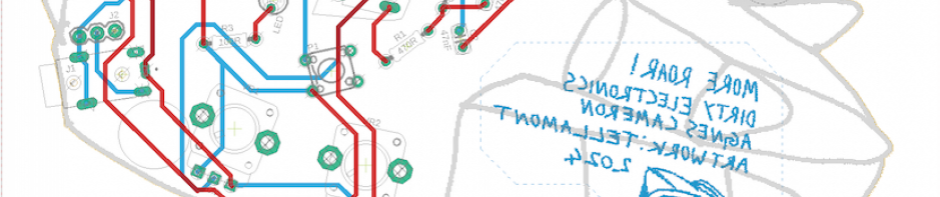
one of the More Roar synth-building workshops run by John Richards and myself last year at the CCI. To make the workshop manageable for students, we almost completely separated the theoretical and practical parts.

I also appreciated Vygotsky’s articulation of the Zone of Proximal Development, the ‘level’ at which a student can work when supported by additional guidance (Vygotsky, 1978). For many of my students, the time-bound nature of their courses means that many of their more ambitious projects do require technical support to realise, and it is helpful to see this form of ‘scaffolded’ learning (which much of my role consists of) as an important stage in a learning process.

References

Didau, D., Rose, N., (2016), ‘What Every Teacher Needs to Know about Psychology’, pp. 43-49 John Catt Educational Ltd, ISBN 9781909717855

Paas, F.G. and van Merriënboer, J.J.G., (1994), Instructional control of cognitive load in the training of complex cognitive tasks. Educational psychology review, 6(4), pp.351-371.

van Merriënboer, J.J., Kester, L. and Paas, F., (2006), Teaching complex rather than simple tasks: Balancing intrinsic and germane load to enhance transfer of learning. Applied Cognitive Psychology: The Official Journal of the Society for Applied Research in Memory and Cognition, 20(3), pp.343-352.

Vygotsky, L.S. (1978) Mind in Society: The Development of Higher Psychological Processes. Cambridge, MA: Harvard University Press.

Posted in TPP | Tagged | Leave a comment

Teaching Observation ↝ Sonic Visions

For my observation of a peer’s teaching, I visited Nicola’s Sonic Visions workshop at CSM. I was really impressed by Nicola’s teaching, and greatly enjoyed being a part of her class. I particularly appreciated the way she maintained a norm of calm and focus in the space.

Posted in TPP | Tagged | Leave a comment

Teaching Observation ↝ Satellite Imaging

Nicola came to visit my class on satellite imaging, taught to the Diploma students. I really appreciated her reflections on the class — it helped me to think further about the way I structure and use information in my teaching, and led to further reflections around cognitive load, which I discuss in my final reflective post.

Posted in TPP | Tagged | Leave a comment

Reflection 3 ↝ Technical Skills

The most appropriate foundation we can imagine right now is one that fosters both the inclination and ability to participate in this process—to articulate current social and cultural phenomena as a group in order to work parallel to them individually. (Bailey, 2010)

I’ve been reading Stuart Bailey’s three pamphlets initiated as part of Parsons’ School of Design’s Academic Workshop, an internal effort in the mid-2000s to reshape the design curriculum. One of Bailey’s core proposals is that the ‘Bauhaus-style’ model still emulated by many art schools at the time, in which students progressed from a basic technical foundation, was outdated and should be reconsidered (Bailey, 2007). In discussing this proposal, Bailey underlines the idea that the proposed approach “isn’t AGAINST teaching basic techniques… only FOR an explicit consenus regarding the whole those components are intended for” (Bailey, 2009).

the original Bauhaus skills wheel and the English translation (right)

In (Only an Attitude of Orientation), Bailey advocates for a ‘pragmatic method’ focussed on outcomes and consequences over preconceptions and principles (Bailey, 2009). This is an approach paralleled by The Carpentries, who take an approach to teaching computational skills driven by practical necessities over computer science theory, arguing that a pragmatic approach will allow people to feel empowered in their work with computers (Wilson, 2019). Bailey also insists that “the ongoing process of attempting to understand ‘is absolutely productive'” (Bailey, 2009).

Reflection

I can relate these ideas to my own experiences organising the Technical Skills Workshops at the CCI, which opt for a ‘concrete’ approach to technical skills. I enjoyed Bailey’s invocation of radical 18th-century schooteacher Joseph Jacotot, who insists that Everything is in Everything — e.g. learning is revealed through students’ observations and relations to a medium (Bailey, 2009). I believe this is true in many ways of technical objects: part of the philosophy of the technical skills workshops is that engaging with any specific skill will aid student’s learning as a whole, even if they seem unrelated.

Technical Skills programme from Autumn 2025

In the third and final pamphlet, From The Toolbox of a Serving Library, Bailey (Bailey 2011) suggests replacing the Bauhaus-informed foundation of many design programmes by a structure based on the Photoshop toolbox “…not in order to capitulate to market demand, of course, but to interrogate its preferences”. This ‘Photoshop-proxy’ course is an interesting provocation, and makes me wonder what an equivalent in creative computing would be. One workshop we’ve debated running for a while is one on the use of AI tools, partly because of our experience of how deletirous the use of these can be to students’ learning. However, I wonder about designing a workshop that truly engages these tools and their limits — potentially in a form of creative misuse, in the vein of artists like Herdimas Anggara and Jaakko Pallasvuo. After all, Bailey’s definition of “criticism” as the ability to confront a subject as it happens (Bailey, 2009).

Lastly, taking Bailey’s invitation to articulate a shared intention between staff and students (Bailey 2009), I feel strongly that “moving from consumers to producers [of technology]” (Lee, 2015) is one of the core ideas behind the technical skills workshops. While it is far from the only orientation in the department, it’s a sentiment I’ve heard echoed by colleagues more generally, and would benefit from further collective discussion.

References

Bailey, S. 2007, Towards a Critical Faculty [Pamphlet], in Frances Stark and Stuart Bailey (eds.), On the Future of Art School: A Primer, Los Angeles: University of Southern California, available here

Bailey, S., 2009, (Only an attitude of orientation) [Pamphlet]. Oslo, Norway: Office for Contemporary Art, available here

Bailey, S., 2011, From the Toolbox of a Serving Library [Pamphlet], The Serving Library and the Banff Centre, available here

Lee, J. 2015, Moving from Consumers to Producers, in Nuncera D. ed., Teaching Community Technology Handbook, Detroit Digital Justice Coalition, available here

Wilson, G. (2019) Teaching Tech Together: How to create and deliver lessons that work and build a teaching community around them. Taylor & Francis. ISBN: 978-0-367-35328-5

Posted in TPP | Tagged | Leave a comment

Case Study 3 ↝ Feedback ↝ CCI Wiki

“How do you learn the things you don’t know you don’t know?” (Taeyoung, 2020)

I shared the concern of other staff in the PGCert workshop around students not realising when they lack core technical skills, and I’m interested in the role of feedback in addressing this. As I work primarily as a technician, my role does not involve formal assessment. The feedback I provide has two main modes:

  • ad-hoc verbal feedback provided in the form of tutorials and ‘walk-in’ support
  • the development of learning materials that allow students to assess their own progress

I hadn’t considered the second mode as ‘feedback’ until reading (Nicol, 2006) on self-regulated learning, which emphasises the need for students to be provided examples of what ‘good performance’ is, and provide guidance for them to develop their own practice. On finishing a knit tutorial, for example, I let students know that they should be able to complete a square sample reliably before moving on to more advanced material, and display samples in the knit room for students to compare their work to.

knit samples seen on a recent visit to the Chelsea knit workshops:
these give students a way to benchmark their own skills

Technicians at the CCI maintain an open wiki that documents our equipment and resources, and includes a range of learning guides. Last year, I also developed the physical computing project index as a way of communicating to students and staff what is possible with the equipment we have, thus articulating the ‘possibility space’ of projects within the CCI and the relative difficulty of different approaches.

The CCI physical computing project index

Reflection

I want to develop the CCI Wiki to provide more benchmarking and self-assessment resources, building on existing work on the physical computing index but orienting more specifically around feedback and development, to support students in developing self-regulated learning.

I’m inspired by the GSAPP Skill Trails, a technical resource for students studying architectural computation at Columbia University (Taeyoung, 2020). The metaphor of hiking a trail is used to emphasise the non-hierarchical nature of the material, where multiple ‘paths’ can be taken through different skills, while acknowledging their relative difficulty. It was developed specifically to accomodate the needs of a fast-growing course where students were struggling to keep up with technical material.

the GSAPP skill trails interface (Taeyoung, 2020)

I will make use of the existing wiki structure to provide resources in the form of structured checklists. For example, after completing an introductory soldering tutorial, students could be sent a list of skills to practice before booking a more advanced session, encouraging them to see electronics as an area that they can also learn through self-directed study (Nicol, 2006). In addition, a guide to what projects are possible at each tutorial level can help students to have a more realistic idea of what level they are working at, and to scope projects better. These changes will help scaffold learning outside of contact hours, and allow students to have a more well-rounded idea of their own level and development.

References

Nicol, D.J. and Macfarlane‐Dick, D., (2006), Formative assessment and self‐regulated learning: A model and seven principles of good feedback practice, Studies in higher education, 31(2), pp.199-218.

Taeyoung, D. (2020), Skill Trails Intro, Columbia University Graduate School of Architecture, Planning and Preservation, talk materials here: https://www.arch.columbia.edu/events/1873-gsapp-skill-trails

Posted in TPP | Tagged | Leave a comment