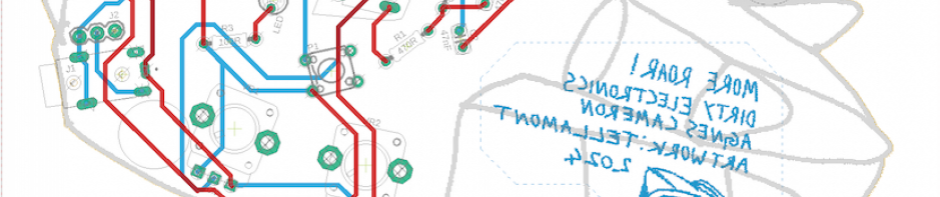
Last year, I led the development and delivery of a series of pre-term workshops for incoming students, introducing core technical skills often treated as prerequisites for many CCI courses. A core aim of the workshops is to create a welcoming learning environment for diverse cohorts, supporting attendees in connecting existing knowledge and practices to unfamiliar technical contexts. Alongside the development of specific skills, the workshops emphasise meta-skills for digital learning, open source software, and diverse political, cultural and artistic engagements with technology.


I proposed these workshops last year as I share the concern of many academic staff that students seem increasingly overwhelmed by the introductory stages of their courses. This is a particularly acute issue for students on shorter postgraduate programs, who are expected to master complex material in a compressed time period. There is a persistent awarding gap of 13-18% for international vs home postgraduate students at the CCI, and international students comprise 90% of the postgraduate student body (compared to 20% at undergraduate level) (UAL Dashboards, 2026).
While language data is not collected directly, overseas students are considerably more likely to speak English as a second language (ESL). As LaCosse et al. observe, “the amount of motivation and effort ESL students must expend to master difficult STEM material may frequently be greater than that required of non-ESL students” (LaCosse et al., 2020). Distinct from undergraduate data, there is also a negative awarding gap on CCI postgraduate programmes for students with disabilities, and a more significant gap between Home White and BAME students (UAL ActiveDashboards, 2026). Stress, poor mental health, and alienation are compounding issues that can further affect these students’ attainment (UAL, 2025).
by ex-CCI student and graphic designer Kesiah Ide
While I received positive feedback from some students after last year’s Jumpstart workshops, the majority of attendees did not report completing the tasks, and the student facilitators hired to assist students requiring extra support were rarely engaged. As such, there is a danger that the workshops could potentially exacerbate, rather than mitigate the stress experienced by incoming students in attendance. Existing measures to promote inclusivity include running multiple sessions at different times (so that students with work or caring responsibilities can attend), making material available in diverse formats, and hiring current students as facilitators to ensure adequate support is available.
Melanie Hoff’s Folder Poetry workshops (Hoff, 2018)
My planned intervention is to redevelop aspects of Jumpstart for next year, based on informal conversations with a range of students and colleagues, and from applying theories and techniques learned during the PGCert. In this evaluation process, I will make use of Gibbs’ reflective cycle as a tool for critical evaluation and development (Gibbs, 1988). I hope to use the analytic aspects to understand whether the issues are primarily with the structure and format of the course (e.g. online vs in-person, whether additional accommodations should be made), or with its content.
In revisiting the course content, I want to draw on the work of Seymour Papert (1980), on constructionism, bell hooks’ (1994) writing on engaged pedagogy and classrooms as spaces of possibility, and Paas and van Merrienboër’s (1994) theory of cognitive load. I reference Papert and hooks in particular as both emphasise the idea of pleasure in learning as realised through interactive pedagogical techniques. My intuition is that a decrease in the overall cognitive load of the activities might open up more space for more open-ended and creative learning.
I hope to use this redevelopment to improve the learning outcomes for attending students with intersecting barriers to access, and develop a lightweight framework for evaluating the effectiveness of these interventions.
References
Gibbs, G. (1988) Learning by doing: A guide to teaching and learning methods. Oxford: Further Education Unit, Oxford Polytechnic
Hoff, M. (2018) Peer-to-Peer-Folder-Poetry. (online) GitHub. Available at: https://github.com/melaniehoff/Peer-to-Peer-Folder-Poetry/blob/master/two-day-workshop.md (Accessed 11 Feb. 2026)
hooks, b., (1994) Teaching to Transgress: Education as the Practice of Freedom, Routledge, ISBN 0-415-90807-8
LaCosse, J., Canning, E.A., Bowman, N.A., Murphy, M.C. and Logel, C. (2020) A social-belonging intervention improves STEM outcomes for students who speak English as a second language. Science advances, 6(40), p.eabb6543.
Paas, F.G. and van Merriënboer, J.J.G., (1994) Instructional control of cognitive load in the training of complex cognitive tasks. Educational psychology review, 6(4), pp.351-371.
Papert, S.A., (1980) Mindstorms: Children, computers, and powerful ideas. Basic books
UAL (2025) Access and Participation Plan 2025-26 to 2028-29, Available at: https://www.arts.ac.uk/about-ual/public-information/office-for-students-info
UAL ActiveDashboards (2026) Postgraduate Attainment and Profiles, 2022–2025, (internal) University of the Arts London